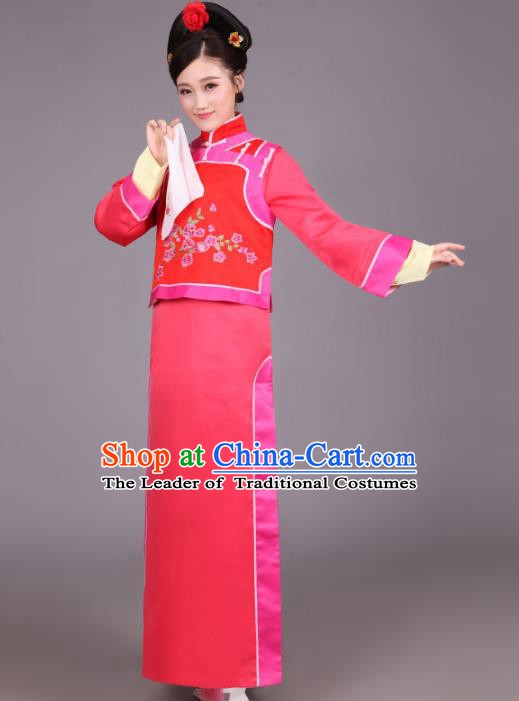
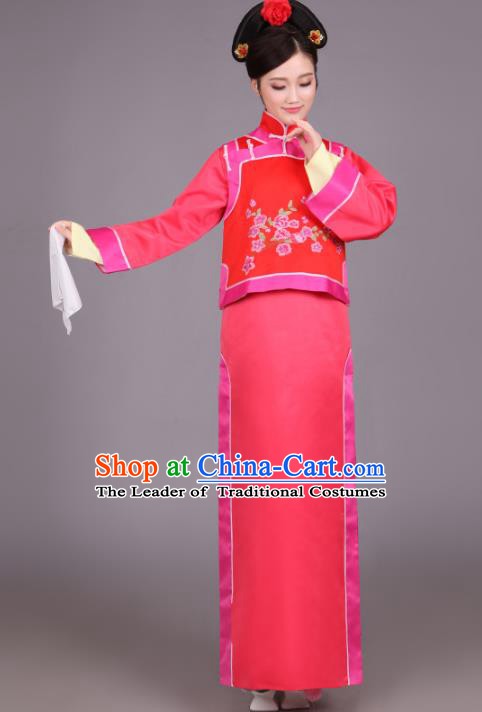
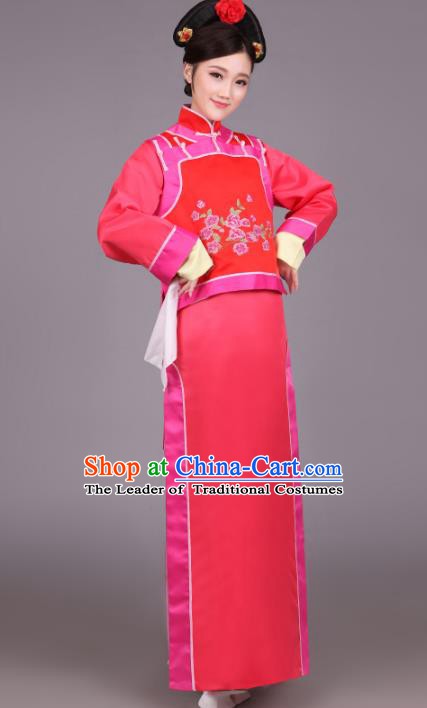
|
Delivery: Free UPS, DHL, EMS express worldwide Handicraft: Well handmade by top traditional tailors Fabrics: Top traditional fabrics Size: All listed sizes are in stock, and you may choose your size based on the size chart Color: If you like the same color as the picture, please select "Same as the picture". Or if you wish to change the primary color, you may select another main color based on our color chart. Free Customization Available: If needed, select this option and leave your measurements (or usual size number) and/or color requests in the order notes. Free Urgent Delivery Available: If needed, just leave your desired date in the order notes. We will try our best to help and handle the rest at no cost!
Artistic & Historical Background:  Listen Listen
The traditional Manchu royal princess costume is the attire worn by women in the Qing Dynasty palace in China.
This costume is known for its magnificence, delicacy, and elegance, representing the splendor of ancient Chinese culture and history.
During the Qing Dynasty, royal women usually wore magnificent robes to display their status and power.
These costumes were typically made of silk and embroidered with exquisite patterns and decorations.
The most famous among them is the Manchu royal princess costume, also known as the "Jinluoyuyi."
The Jinluoyuyi is an extremely expensive robe, sewn with gold thread.
It is usually made of multiple layers of thin gauze and silk, embroidered with various patterns and decorations.
The design of this costume is very complex, requiring years of study and practice to create a perfect work.
In addition to the Jinluoyuyi, there are other important Manchu royal princess costumes, such as the "dragon robe" and the "phoenix crown."
These costumes are all made of silk and embroidered with exquisite patterns and decorations.
They not only have high artistic value but also represent the prosperity and development of ancient Chinese culture.
In conclusion, the traditional Manchu royal princess costume is an essential part of Chinese history and culture.
It represents the prosperity and wealth of ancient Chinese society and is an indispensable part of China's cultural heritage.
|

 -Year Leader. Chosen by Hollywood Studios | American Museum of Natural History | Opera America | Harvard University