|
Delivery: 1-17 days FREE worldwide shipping Handicraft: Well handmade by top traditional tailors using top quality fabrics Size: The listed sizes are in stock. If you prefer to customize it, please select "Free Customization" and leave us a note containing your size number or measurements of height, weight, bust, waist and hip on the order form. Color: If you like the original color most, you do not need to select it or simply select "Same as the picture". If you wish to change the primary color, you may select it based on the color chart. Or you may select "Free Customization" and leave us a note containing your detail color requests on the order form. Free Customization Available: If you prefer to let our top traditional tailors specially customize it for you, please select "Free Customization" in size or color, then provide your measurements (or usual size number) and/or color requests in the order form. This special tailoring service is free. Free Urgent Delivery Available: If needed, just leave your desired date in the order notes. We will try our best to help and handle the rest at no cost!
Artistic & Historical Background:  Listen Listen
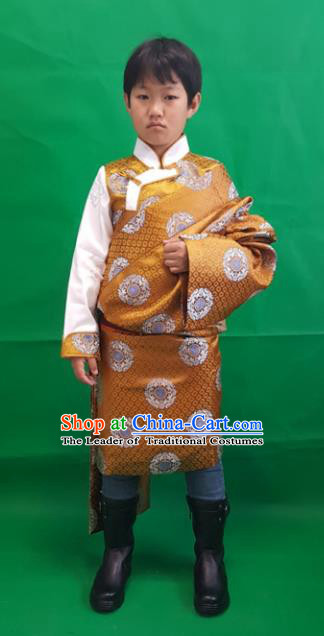
The Tibetan children's clothing, also known as the yellow Tibetan robe, is a historically and spiritually significant attire in Tibetan culture.
It represents the Tibetan people's reverence for nature, religion, and culture, while also reflecting their unique aesthetic views and lifestyle.
The design of Tibetan children's clothing is unique and exquisite, usually composed of bright colors such as red, blue, and white.
The most eye-catching one is the yellow Tibetan robe, which is the most popular traditional attire among Tibetans.
This robe is made of high-quality silk or cotton fabric and embroidered with various patterns and symbols, such as auspicious objects, animals, and plants.
These patterns often have symbolic meanings, representing the Tibetan people's awe of nature and respect for life.
In addition to its beauty and elegance, Tibetan children's clothing also has important historical significance.
In the past, this attire was an essential part of Tibetan people's daily lives, especially in religious ceremonies and important occasions.
It was not only a decorative item but also a symbol of identity and social status.
By wearing this attire, people could express their beliefs, culture, and traditional values.
Nowadays, although modern lifestyles have changed people's dressing habits, Tibetan children's clothing still retains its unique charm and value.
It is not only a part of cultural heritage but also a reminder of the past and an expectation for the future.
Whether as an artwork or a practical tool, Tibetan children's clothing carries rich spiritual and cultural connotations and historical significance.
|

 -Year Leader. Chosen by Hollywood Studios | American Museum of Natural History | Opera America | Harvard University